
Can Dogs Eat Watermelon? A Guide to Safe Summer Treats
Can Dogs Eat Watermelon? is a tasty treat for hot summer days. It helps you stay hydrated, keeps your heart healthy, and can even soothe sore muscles. Some people even think it can help stop cancer cells from growing. But can dogs enjoy the same benefits? Is watermelon safe for them? Let’s find out if dogs can eat watermelon!
Watermelon for Dogs: The Basics
Yes, dogs can eat watermelon! But, there are a few things you should know before you share a slice with your furry friend.
Watermelon is full of vitamins and minerals. It’s also low in calories. This makes it a great treat for almost anyone, including your dog. It’s especially good for keeping your dog hydrated during the summer. When dogs run and play outside, they lose water. Watermelon can help them get that water back.
Watermelon has vitamins and minerals that can boost your dog’s immune system. These include:
- Magnesium
- Vitamin A
- Vitamin C
- Beta carotene
- Potassium
However, don’t give your dog too much watermelon. Dogs’ stomachs can’t handle fruit the same way people’s stomachs can.

Watermelon Rinds: Should Dogs Eat Them?
No, dogs should not eat watermelon rinds. The rind is the green part of the watermelon. While the red part is good for dogs and people, the rind is not. Can dogs eat watermelon rind?
The rind doesn’t have any nutrients that will help your dog. It can also be a problem for a few reasons:
- Choking Hazard: The rind can be hard to chew and swallow. This can cause your dog to choke.
- Internal Blockage: If your dog swallows a large piece of rind, it can get stuck in their digestive system. This can cause serious problems.
- Hurts Teeth and Gums: Chewing on the hard rind can hurt your dog’s teeth and gums.
The rind doesn’t help with hydration either. If you want your dog to enjoy watermelon, remove the rind first.
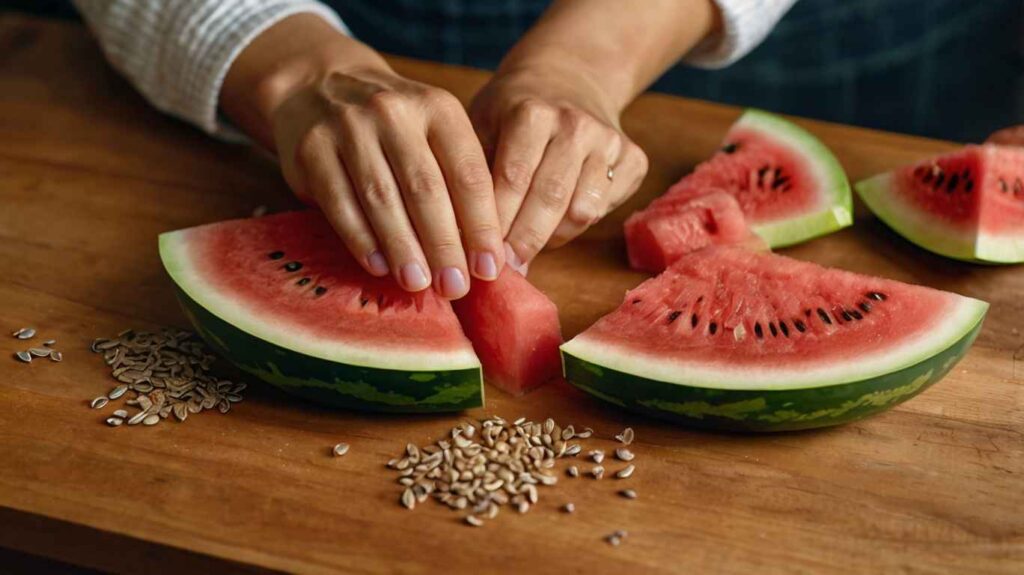
Watermelon Seeds: Are They Safe for Dogs?
No, dogs should not eat watermelon seeds. Seeds and pits in fruits are often not safe for anyone to eat. They can have toxins, like cyanide, which can make you very sick.
These toxins can cause:
- Kidney failure
- Poisoning
- Choking
- Internal blockage
- Appendicitis
Although watermelon seeds might not be as dangerous as other seeds, it’s still best to remove them. By removing the seeds, you avoid any chance of poisoning or choking.

Seedless Watermelon: The Best Choice for Dogs
So, what kind of watermelon should you give your dog? The best choice is seedless watermelon.
If you buy a seedless watermelon, you don’t have to worry about removing the seeds. Here’s how to serve it to your dog:
- Buy a seedless watermelon.
- Cut it into slices or bite-sized pieces. Small pieces are easier for your dog to eat, especially if it’s their first time trying watermelon.
- Remove the rind. This makes it easier and safer for your dog to eat.
Yes, dogs can eat seedless watermelon. It’s the safest way for them to enjoy this summer treat!
Key Points to Remember
- Do: Give your dog small pieces of seedless, rindless watermelon.
- Don’t: Give your dog watermelon rind, as it offers no health benefits and can be a choking hazard.
- Don’t: Give your dog watermelon seeds, as they may cause health problems, choking, or poisoning.
Pay attention to your dog when they try watermelon. Do they seem to enjoy it? Watch for any bad reactions, like throwing up or diarrhea. If your dog has a bad reaction, give them less watermelon next time. If they still have problems, it’s best to avoid watermelon altogether.

Final Thoughts
Watermelon can be a refreshing and healthy treat for your dog, as long as you take the right steps. Remember to remove the seeds and rind. Cut the watermelon into small pieces. By doing this, you can share a tasty summer snack with your furry friend safely!
Does your dog love watermelon? Tell us about it in the comments below!
Consider exploring healthy, fresh-cooked food options to give your dog a balanced and nutritious diet.
One Response